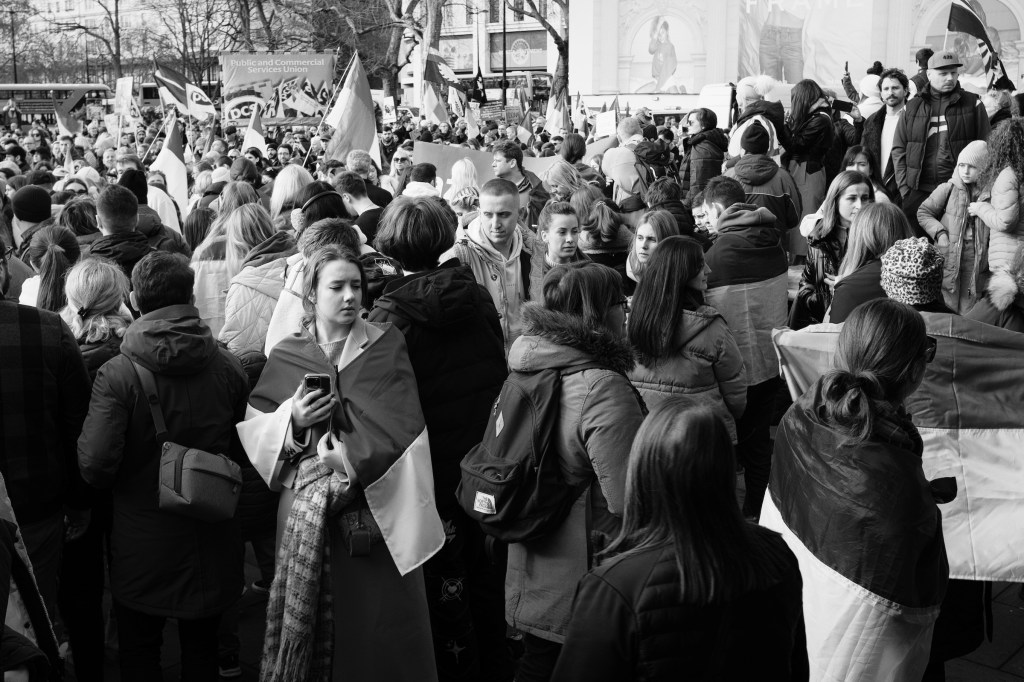
Street photography is an art form that candidly captures society and the human condition. Both its beauty as a medium and its lure for photographers lies in the spontaneity and unpredictable nature of public spaces and the citizens within them.
When you’re out practising street photography, it’s easy to mistakenly equate the chaotic energy of urban landscapes with the need for a chaotic approach. While this frenetic style works with some people’s creative vision, it is a trap for me, and such assimilation with chaos is a mistake in my practice. Instead, I can gather images more in keeping with my intention by being a pillar of calm within this chaos, being mindful of the balance between my calmness and the spontaneous nature of street scenes.
Below, I will explore the reasoning and the perceived benefits behind my choice of praxis for a slower form of street photography. My experience suggests that the slow approach enhances the quality of the images captured and deepens my connection to the environment, subjects, and the essence of street photography. By writing down my thoughts, I hope to deepen and affirm my understanding of this praxis and pass on the theory to anyone who may find it valuable.
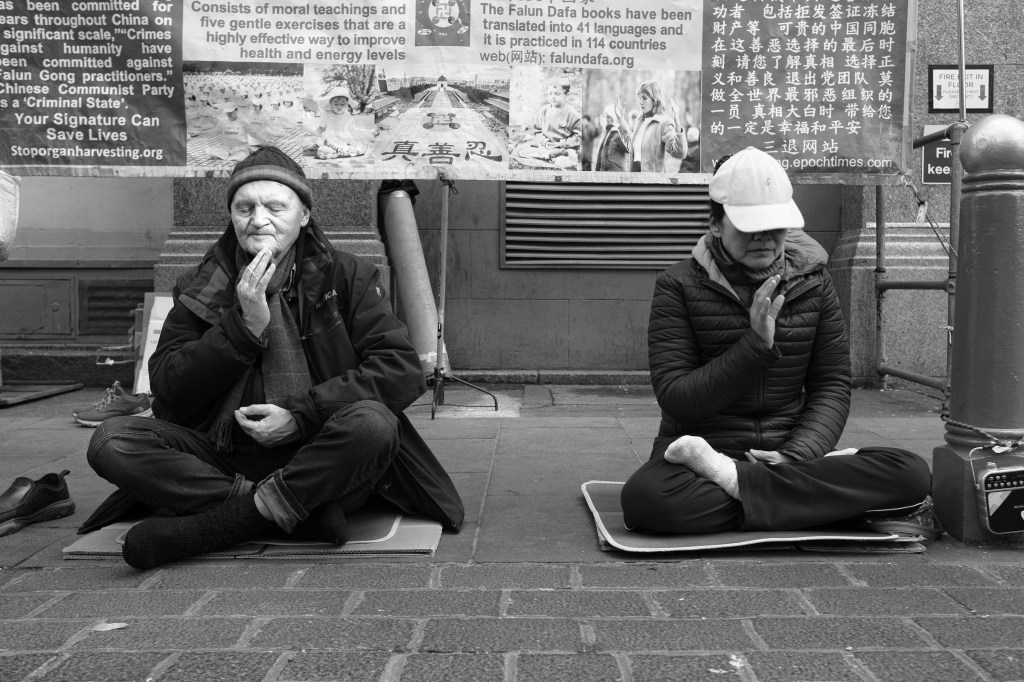
The praxis of street photography
At its core, street photography is an observational art. It requires a keen eye for detail, an intuitive sense of timing, and the ability to see the extraordinary in the mundane. The streets are a stage where the actors refuse to rehearse and move unpredictably. In this context, photographers are not just observers but directors, trying to understand the actor’s movements and make them coherent in a single image.
Street photography should go beyond merely snapping pictures of strangers in public spaces. It’s about recognising order in chaos, understanding the rhythm of cities, and predicting moments before they unfold. Such a deep understanding can only be achieved through a slow and deliberate engagement with one’s surroundings.
The value of moving slowly
In a world dominated by the rapid consumption of images and the constant pressure to produce content, the idea of slow movement might seem counterintuitive. Yet, this very approach sets apart the most impactful street photography. Slowing down allows photographers to immerse themselves in their environment, fostering heightened awareness and anticipation. It enables them to observe whatever appeals to them, be it the interplay of light and shadow, the subtleties of human expressions, and the stories that unfold in the public space.
Moving slowly also means taking the time to connect with the people and places being photographed. It’s about building trust, even in brief encounters, and respecting the stories and spaces photographers wish to capture. By taking a deliberate and transparent stance in public spaces, photographers can make their intentions clear to passersby, significantly reducing the likelihood of misunderstandings or confrontations.
My slow street photography respects the subjects and the space, as it does not rely on surreptitious shots taken in haste.
Furthermore, the slow pace allows photographers to engage with subjects when appropriate, offering a chance to obtain consent – or at least gauge comfort levels. This transparency builds trust between the photographer and the subject and enhances the integrity of the photographic process.
In short, it underscores a respectful exchange, where the photographer is not merely taking from the scene but participating in a moment of mutual acknowledgement, thereby upholding a higher standard of ethics in street photography.
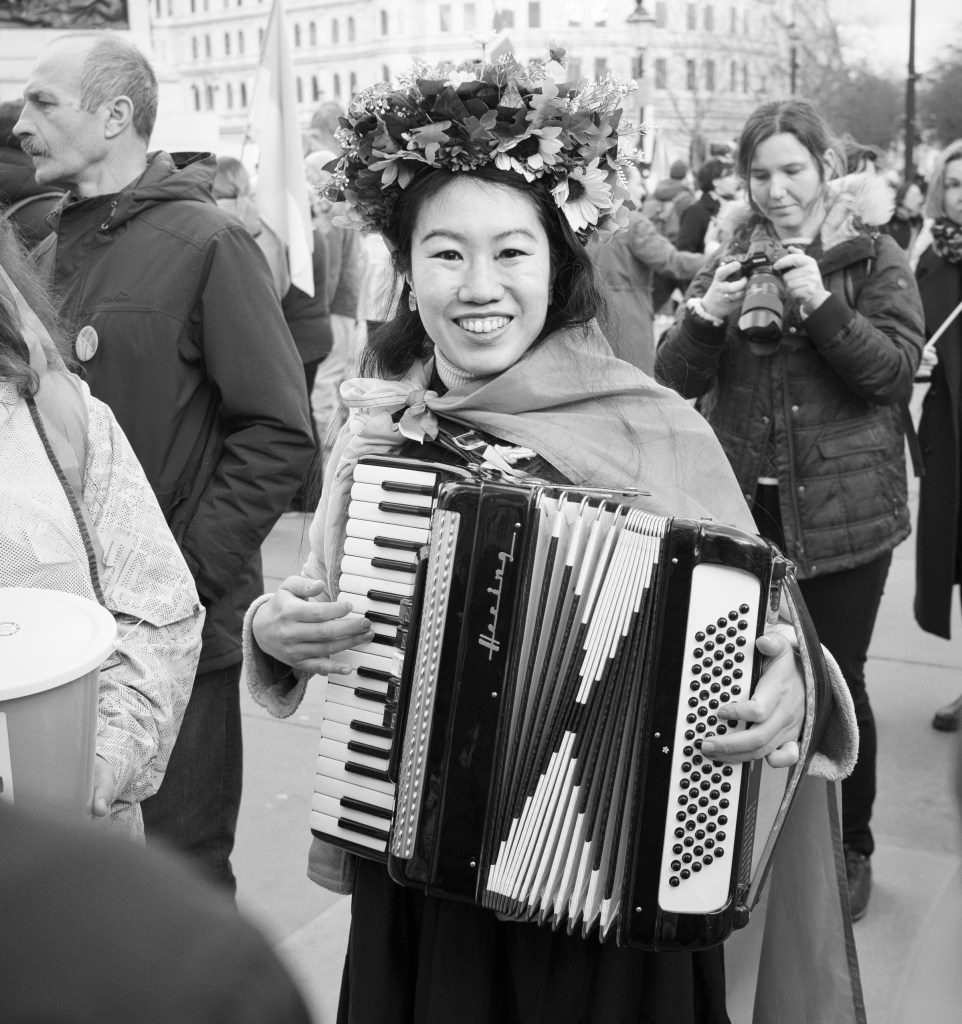
Taking your time as a path to mindfulness and creativity
I know from experience that taking your time in street photography is not just a method. It’s a mindset. As such, it takes repeated practice and conscious intention. Naturally, practising street photography can induce adrenaline, and it’s easy to lean into high energy (or the effects of alcohol, as I have done in the past). While acceptable for some and enjoyable occasionally, I find this an unsustainable approach.
Taking time and slowing down encourages mindfulness – a presence of mind that can make photographers more attuned to their surroundings and creative instincts. This mindfulness leads to a more thoughtful composition, where every element in the frame is intentional, and as little is left to chance as is possible in a public sphere.
Moreover, this deliberate approach fosters creativity. In my experience, it has allowed me to experiment with different perspectives and explore new narratives within familiar scenes. For me, taking your time means not settling for the first shot but seeking out the unique, the overlooked, and the fleeting moments you might otherwise miss in the name of haste.
Challenges and rewards
A slow approach to street photography is a powerful approach, but adopting it in the fast-paced environment of the streets is not without challenges. It requires patience, discipline, and a willingness to let go of expectations. There will be days when the decisive moment never seems to come, and pursuing the perfect shot feels futile. Yet, I truly believe that dedicated and patient photographers often find their most profound insights and connections in these moments of stillness and waiting.
In time, the rewards of moving slowly and taking your time in street photography are immeasurable. It leads to a deeper engagement with the world, yielding images that resonate with great authenticity and compositional accomplishment.
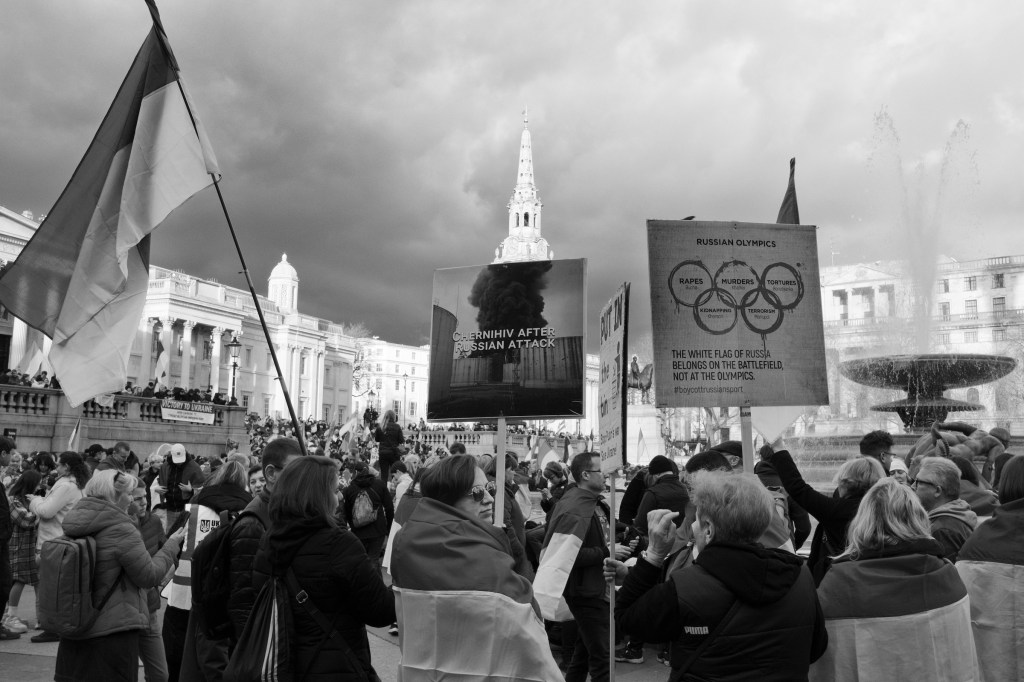
Calling it a day
Taking it slow isn’t just for capturing the photograph – it’s a mindset you apply to all aspects of photography, including knowing when to call it a day.
One of the most important of these is being patient with the ongoing process of building a street photography portfolio or project and expecting it to fall into place in only a few days. Once you’ve hit your limit on the street – whether you’ve got the perfect shot or not – it’s essential to accept the day is done and head home. This decision is crucial to avoid creative and physical burnout – I know first-hand that driving yourself into the ground is not worth the scant extra photos you may harvest from more hours on the street.
In the long run, it improves efficiency. It underscores the principle that in the deliberate pace of street photography, the artist’s internal state – balanced and energised – is as important as the external scenes they aim to capture. Pacing yourself is not a limitation but a strategy to enhance longevity and a creative vision’s potency.
Final thoughts
The praxis of my new approach to street photography emphasises moving slowly and taking your time, offering a powerful counter-narrative to the fast-paced world of instant gratification.
Thanks for reading.

 William Austin-Lobley Photography
Leave a reply to Finding peace through the lens: My appreciation of landscape photography – William Austin-Lobley Photography Cancel reply